
Picture this classic scenario: You’re standing at a Paris metro station with a double stroller, two jet-lagged kids, and a crumpled transit map. Your 6-year-old needs a bathroom, your 9-year-old is complaining about walking, and you’ve just realized the elevator at this station is out of service. Sound familiar? According to the Paris Region Facts and Figures 2025 report, the city welcomed 48.7 million visitors in 2024, and a significant portion were families navigating this exact challenge. The solution isn’t mastering the metro system—it’s choosing a smarter transportation strategy from day one.
Hop-on hop-off buses transform Paris sightseeing from a logistical nightmare into an adventure your kids will actually remember. Instead of deciphering subway maps while managing meltdowns, you’re sitting on an open-top deck watching the Eiffel Tower come into view while your children listen to stories specifically designed for their age group. Tootbus and similar operators have refined this concept into family-friendly systems that combine flexible transportation with access to attractions your kids will genuinely enjoy—not just another museum where they’re told not to touch anything.
Your Paris family bus tour essentials before you book:
- Hop-on hop-off buses eliminate metro navigation stress while keeping kids entertained with age-appropriate audio commentary
- Combined passes unlock kid-tested attractions like Aquarium de Paris (13,000 marine animals) and Seine river cruises without separate ticket hassles
- Choose 24-hour passes for energetic older kids, 48-hour for balanced sightseeing, or 72-hour for toddler-friendly pacing with built-in flexibility
- Mobile apps with real-time bus tracking prevent the “stuck waiting with cranky kids” scenario that ruins vacation days
Why hop-on hop-off buses solve the Paris family travel puzzle
The metro versus bus debate isn’t about being a “real traveler” versus a tourist—it’s about whether you want to spend your limited vacation time wrestling with transit logistics or actually seeing Paris with happy children. The reality on the ground is brutally simple: Paris metro stations weren’t designed for American families with strollers, diaper bags, and exhausted elementary schoolers.
Most Paris metro stations lack elevator access—a reality that means carrying strollers up steep stairs while managing children and luggage. Contrast this with hop-on hop-off buses that pull up to street level, welcome strollers aboard, and turn transportation itself into entertainment rather than an endurance test.
- Stroller-friendly boarding at street level with designated storage areas
- Kids’ audio commentary turns sightseeing into storytelling, not a lecture
- Unlimited hop-on hop-off flexibility accommodates unpredictable nap times and meltdowns
- Open-top views create Instagram moments kids remember (unlike dark metro tunnels)
- Multi-day passes cost less than individual metro tickets plus attraction entries when combined
- Peak season traffic can extend route times during July and August afternoons
- Weather dependency (rain covers available but diminish the open-top experience)
- Bus frequency varies by route and season, requiring app-based timing rather than spontaneous hopping
Here’s what most guidebooks won’t tell you: the mental load of navigating Paris public transit with children drains more energy than the physical sightseeing. You’re constantly calculating transfers, checking if stations have elevators, timing connections around bathroom breaks, and second-guessing whether you’re on the right platform. Hop-on hop-off buses replace that cognitive burden with a simple loop: board at any stop, ride as long as the kids are engaged, hop off when they need to move their legs or see something up close.
The educational value matters too. When your 8-year-old hears a story about how Gustave Eiffel built his famous tower specifically for the 1889 World’s Fair, delivered in language designed for children rather than architecture students, they’re absorbing history without realizing they’re learning. Try achieving that same engagement while navigating metro turnstiles.
Top kid-approved attractions included with Tootbus Paris passes
Finding attractions in Paris that actually work for children—not just tolerate them—separates mediocre family vacations from the trips your kids will still talk about in high school. Tootbus addresses this by partnering with attractions that have proven track records with young visitors, bundling access directly into their sightseeing passes rather than making you research and book everything separately.
Tootbus operates multiple routes across Paris with true hop-on hop-off flexibility—meaning when your toddler crashes for an unexpected nap at 2 PM, you don’t forfeit your itinerary. Buses run with audio commentary specifically created for children’s attention spans, available in English plus numerous other languages. Their mobile app provides real-time bus tracking, plus access to Tootie, an AI guide that answers questions in over 50 languages. Pass validity spans 1, 2, or 3 consecutive days, activating only when you first scan aboard.
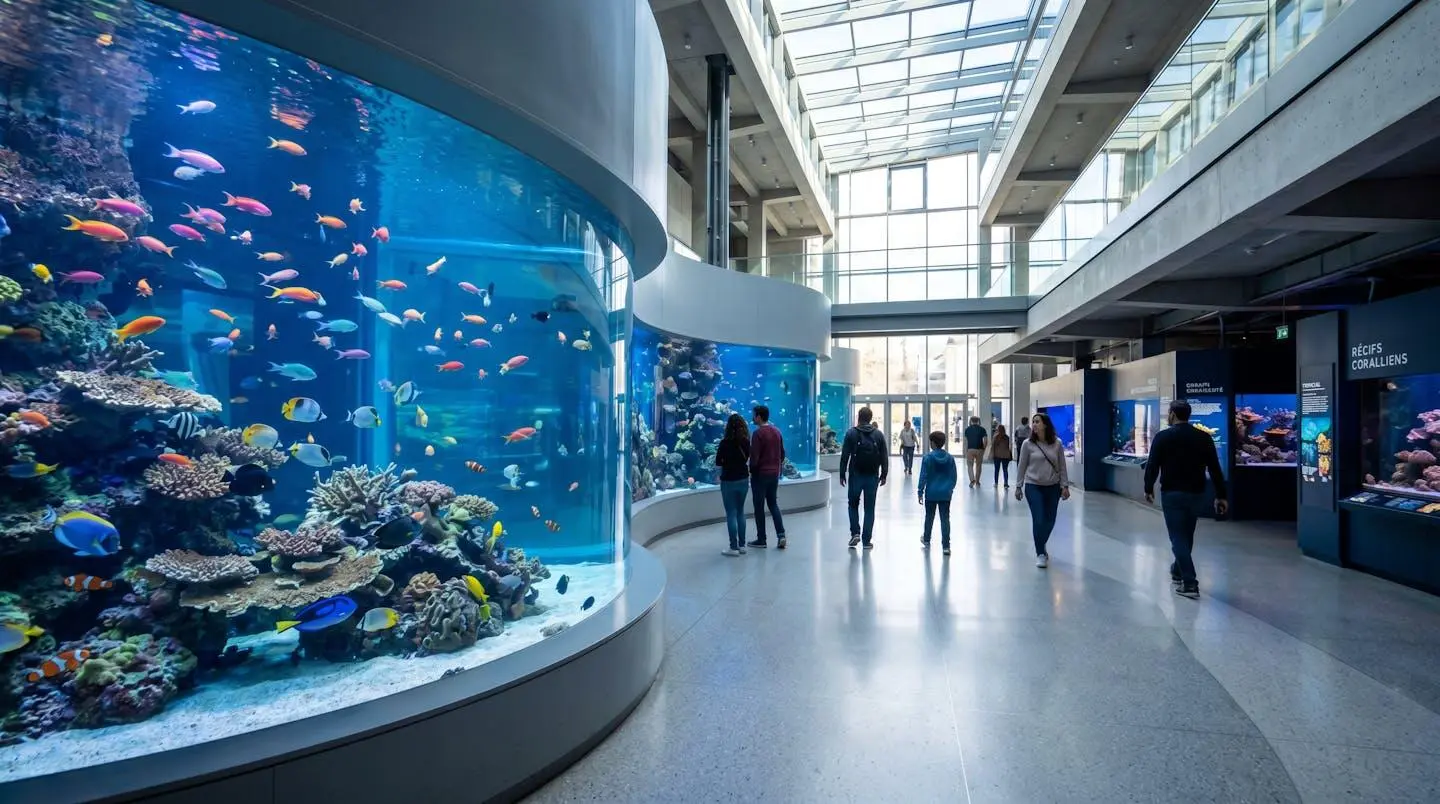
Located just steps from the Eiffel Tower at 5 avenue Albert de Mun, the official Aquarium de Paris page confirms that it houses 13,000 marine animals across thoughtfully designed exhibits that prioritize child engagement over academic taxonomy. Europe’s largest jellyfish collection mesmerizes even the most screen-addicted kids, while the touch tank allows hands-on interaction that’s strictly forbidden at most Parisian museums. Doors open daily at 9:30 AM with last admission at 6:00 PM (Saturdays extend until 9:00 PM, closed only on Bastille Day). Expect to spend roughly 90 minutes to 2 hours here—enough time to satisfy curiosity without triggering museum fatigue. Best for ages 3-12.
The Musée Grévin delivers exactly what children want from Parisian culture: recognizable faces they can photograph themselves next to rather than abstract art they’re instructed not to touch. This institution has refined celebrity wax figures since 1882, now featuring everyone from historical French icons to contemporary pop stars your kids will actually recognize. Age appropriateness skews slightly older—children under 6 may not grasp why these motionless figures matter, while elementary and middle schoolers genuinely enjoy the interactive photo opportunities. Count on spending 60 to 90 minutes here, making it an ideal afternoon activity when energy levels start dropping. Best for ages 6+.
Seine cruises function as the secret weapon for family itinerary planning because they require almost nothing from your children except sitting still while Paris glides past. After hours of walking and active museum exploration, this passive sightseeing gives everyone—parents included—a legitimate break without feeling like you’re wasting valuable Paris time. The age range genuinely spans toddlers through teenagers, though the experience serves different purposes across that spectrum. Younger children appreciate the boat motion and water proximity more than the architectural commentary, while older kids can connect the cruise experience to landmarks they’ve already visited from ground level. Most Seine cruises integrated with bus passes run approximately one hour. Best for all ages.
The comparison below evaluates three included attractions across five family-relevant criteria: age appropriateness, time commitment, interaction level, and weather constraints. Each row helps you match specific children’s profiles to the attraction most likely to succeed with your family.
| Attraction | Best Ages | Typical Visit | Engagement Level | Weather Dependent |
|---|---|---|---|---|
| Aquarium de Paris | 3-12 years | 90-120 min | High (interactive touch tank) | No (fully indoor) |
| Musée Grévin wax museum | 6+ years | 60-90 min | Medium (photo ops, recognition-based) | No (fully indoor) |
| Seine river cruise | All ages | 60 min | Low (passive viewing, relaxing) | Yes (open-deck boats) |
Choosing your pass: 24, 48, or 72-hour options for families
Pass duration selection determines whether you feel rushed and frantic or relaxed and flexible throughout your Paris stay. The wrong choice doesn’t just waste money—it creates unnecessary pressure that turns family vacation into a checkbox optimization exercise. The right choice aligns with how your specific children actually behave on vacation, not some idealized version you imagine before departure.
Here’s the framework most families miss: pass duration isn’t about how long you’re staying in Paris total; it’s about how many consecutive days you want hop-on hop-off transportation plus attraction access to be your primary sightseeing method. If you’re in Paris for 5 days, a 48-hour pass might cover your intensive sightseeing window while leaving other days for neighborhood wandering, parks, or day trips outside the city.
The 24-hour option works beautifully for families with children aged 8 and above who can maintain focus and energy for extended sightseeing sessions. You’ll need to maximize your activation day, typically starting early morning and pushing through until early evening with strategic breaks for meals and brief rest stops. This compressed timeline demands advance planning—you can’t afford to waste 2 hours debating which attraction to visit next or missing bus connections because you didn’t check the app. If your family tends toward spontaneous, go-with-the-flow vacation styles, the 48-hour option eliminates this pressure even if you theoretically could cover everything in 24 hours.
Two consecutive days creates the Goldilocks scenario for family Paris sightseeing: enough time to experience major landmarks and 2-3 key attractions without the “we must do everything right now” panic. Day one typically covers the Eiffel Tower, Seine cruise, and Arc de Triomphe area with your children still relatively fresh and excited. Day two targets specific interests like the aquarium or wax museum, with lower expectations and more flexibility for spontaneous breaks. The 48-hour pass also accommodates the reality of family travel: someone will sleep poorly due to jet lag, another family member might wake up with a minor cold, or weather might force indoor-only activities for half a day. In practice, most American families with elementary-aged children report 48 hours hits the sweet spot between value and usability.
Three days makes sense almost exclusively for families traveling with children under 5 or those deliberately choosing a slow-travel philosophy. Toddler schedules dominated by naps, early bedtimes, and unpredictable meltdowns mean you’re realistically sightseeing in 2-3 hour windows rather than full days. The 72-hour pass removes time pressure entirely, letting you embrace a “we’ll see what we see” approach. This extended duration also serves families staying in Paris for a week or longer who want bus access spread across multiple days without clustering all major sightseeing into 48 consecutive hours.
- If your children are all 8+ years old and you have 3-4 days total in Paris:
Choose the 24-hour pass for intensive day-one sightseeing covering Eiffel Tower, Louvre district, and Notre-Dame area, then explore neighborhoods independently on remaining days. Your kids’ stamina can handle the compressed timeline.
- If you have mixed ages (one elementary schooler, one toddler) and 4-5 days in Paris:
Select the 48-hour pass to spread major landmarks across two days with flexibility for mid-day hotel returns when the toddler needs downtime. This prevents older sibling resentment about cutting visits short.
- If you’re traveling with children under 4 or staying in Paris a full week:
Opt for the 72-hour pass to accommodate unpredictable toddler schedules and integrate bus touring into a leisurely multi-day rhythm without time pressure. You can alternate sightseeing days with playground/park days.
50 million
Visitors projected for Paris in 2025, making advance planning and flexible touring options essential for avoiding overwhelming crowds
Routes, stops, and family-friendly timing strategies
The fundamental difference between families who love hop-on hop-off buses versus those who complain the system doesn’t work comes down to timing strategy, not the service itself. Boarding randomly at 2 PM in August when your kids are already tired, hungry, and overstimulated sets everyone up for failure. Understanding how routes actually function in real-world family scenarios—not idealized marketing descriptions—determines whether this becomes your favorite Paris decision or biggest regret.
Most major Paris hop-on hop-off operators run multiple routes that overlap at key landmarks but diverge to cover different neighborhoods. The classic mistake is trying to ride complete loops to “see everything,” which takes 2+ hours per circuit without stops—an eternity for children. Strategic families identify 3-4 priority stops per half-day, using buses purely for point-to-point transportation with sightseeing as a bonus. Timing windows matter: 9:00 AM to 11:30 AM is ideal when kids are fresh and attractions less crowded. Midday (11:30 AM to 2:30 PM) works for meals and Seine cruises or hotel returns for nappers. Secondary sightseeing fits 3:00 PM to 6:00 PM for less critical stops.
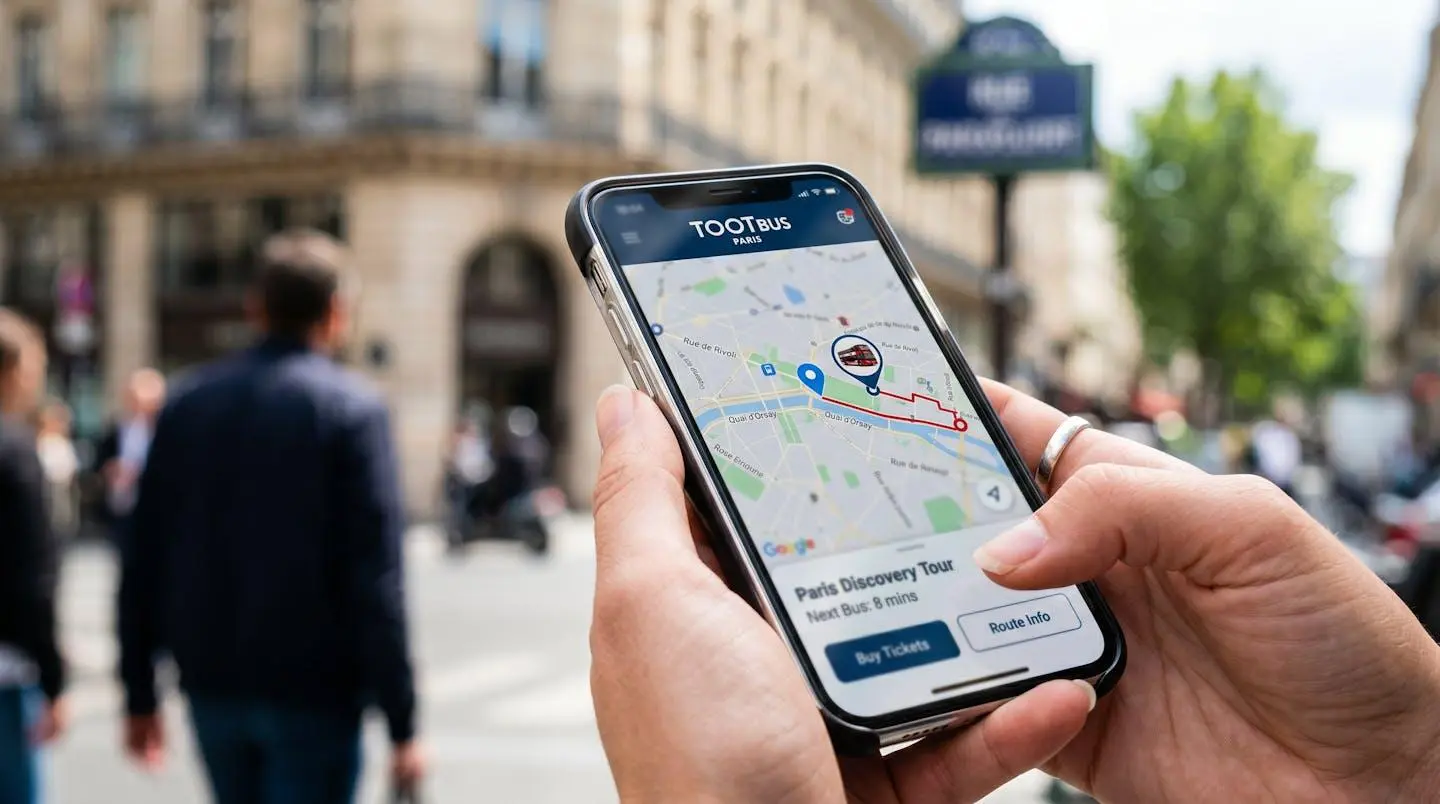
Real-time tracking through mobile apps eliminates the primary frustration of traditional transit: standing at stops with restless children wondering if the next bus arrives in 3 minutes or 30. When you can see that the next bus is 15 minutes away, you make the informed decision to grab snacks at a nearby café rather than forcing kids to wait idle on a street corner.
The iconic landmarks visible from bus routes—illuminated at night in ways that earned Paris the nickname Paris city of lights—create natural excitement that makes the transportation itself feel like an attraction rather than simply a means to an end.
A sample itinerary structured around children’s energy peaks and bus frequency demonstrates how strategic timing transforms the experience:
-
Board first bus near hotel, ride to Eiffel Tower with minimal crowds
-
Complete Eiffel Tower visit, re-board bus toward Aquarium de Paris
-
Lunch break near aquarium with kid-friendly options
-
Aquarium visit during post-lunch calm (90 minutes)
-
Board bus for Seine cruise departure point or hotel return if kids are tired
-
Seine cruise (passive entertainment, parents rest too)
Tourism Review reports that Paris recorded 175 million overnight stays in 2024, with major landmarks like the Louvre attracting 8.9 million visitors and the Eiffel Tower drawing 6.3 million. These numbers underscore why strategic timing and flexible transportation matter—you’re not just managing your family’s schedule, you’re navigating millions of other visitors with the same landmark bucket list.
Parent survival tips: strollers, snacks, and sanity savers
The unglamorous logistics nobody photographs for Instagram—but everyone wishes they’d known before departure—separate families who return from Paris exhausted from those who genuinely enjoyed the experience. Standard travel guides cover what to see; almost none address the operational realities of managing young children through a full day of urban sightseeing.
Stroller strategy deserves serious advance planning. Lightweight umbrella strollers navigate Paris infinitely better than full-size American travel systems, but you’ll still face situations where carrying the stroller proves easier than pushing it (cobblestone streets, crowded buses during peak times, metro stations without elevator access). If your child has outgrown strollers at home but might need one after walking 3+ miles of sightseeing, bring it anyway—carrying a sleeping 50-pound child through Paris at 6 PM isn’t the cultural immersion you’re imagining.
Peak season reality check: July and August bring not just crowds but also temperatures that can hit 85-90°F (29-32°C) on Paris’s open-top buses with minimal shade. Most American families dramatically underestimate how quickly young children overheat in direct summer sun. Spring (April-May) and early fall (September-October) offer significantly better conditions for families with children under 10.
Snack access transforms difficult moments into manageable ones. European stores sell different brands and formats than American grocery stores, which sounds trivial until your picky eater refuses every available option at 4 PM when their blood sugar crashes. Pack familiar granola bars, crackers, or whatever your children reliably eat from home—yes, even though you’re trying to encourage cultural openness.
- Refillable water bottles for each family member (Paris tap water is safe and fountains are common)
- Sunscreen and hats for open-top deck, even on partly cloudy days (UV reflects off light-colored buildings)
- Light jacket or sweater for each person (morning and evening temperatures drop significantly year-round)
- Backup entertainment for bus rides (coloring books, small toys) when audio commentary loses their interest
- Small first-aid kit with children’s pain reliever, bandages, and any prescription medications
- Portable phone charger (using apps all day for bus tracking and photos drains batteries faster than anticipated)
- Familiar snacks from home that you know your children will eat during energy crashes
Bathroom accessibility causes more family travel stress than virtually any other logistical factor. Paris isn’t like American cities with public restrooms in every shopping center. When your 5-year-old announces an urgent need, you’ll rely on café facilities—which in France typically require purchasing something first. Department stores like Galeries Lafayette offer reliable facilities near major sightseeing areas.
The reality for families with young kids often means accepting that you won’t see everything you planned, and that’s genuinely okay. The point isn’t checking every landmark off a list; it’s creating positive family memories in ways that make them excited about future travel rather than dreading it.
Do I need to book hop-on hop-off bus tickets in advance or can I buy them on the day?
You can purchase tickets both ways, but advance booking through operator websites typically offers better rates and guarantees availability during peak summer months (July-August) when buses can sell out by mid-morning. Booking ahead also means one less transaction to manage with tired children on your first Paris morning when you’re still navigating jet lag and unfamiliar neighborhoods.
Are strollers allowed on hop-on hop-off buses, and is there storage space?
Most Paris hop-on hop-off operators permit strollers aboard with designated storage areas on lower decks, though you may need to fold larger models during peak crowding. Lightweight umbrella strollers navigate this system far better than full-size travel systems. Confirm specific policies with your chosen operator, as rules vary slightly between companies and certain thematic tour routes may have different restrictions than standard hop-on hop-off circuits.
What happens if it rains during our bus pass validity period?
Buses operate in rain with plastic covers available for open-top decks, though this obviously diminishes the experience compared to sunny weather. Your pass remains valid regardless of weather, so you can choose to spend rainy periods at indoor attractions like the aquarium or museums, then use bus touring for clearer weather windows. This flexibility is precisely why multi-day passes work well for families—you’re not forced to maximize sightseeing during a single day of poor weather.
At what age do children need to pay for their own bus pass?
Age policies vary by operator, but most Paris hop-on hop-off services offer free admission for children under 4 years old, with reduced youth pricing typically extending through ages 4-15. Always verify current age brackets with your specific operator when booking, as these policies occasionally adjust and may differ for combined attraction packages versus bus-only passes.
Can we bring our own food and drinks on the bus?
Most operators permit sealed snacks and water bottles but prohibit full meals or messy foods that could damage seats or create odor issues for other passengers. Think granola bars and fruit pouches rather than sandwiches with condiments. This policy recognizes that families with young children need access to snacks while still maintaining reasonable standards for shared spaces. When in doubt, ask staff during boarding rather than assuming permissions.
Looking beyond Paris itself, the principles of flexible touring, age-appropriate attraction selection, and realistic logistics apply to virtually every major destination you might consider for future trips. If this approach to family travel resonates with your planning style, our comprehensive guide to family travel destinations explores additional cities and regions where similar hop-on hop-off systems and attraction combinations work beautifully for American families navigating international travel with children.
- Download the Tootbus mobile app and familiarize yourself with the interface before arriving in Paris
- Select pass duration based on your children’s ages and energy levels, not just total days in Paris
- Verify current US passport requirements and ETIAS authorization timeline for France entry
- Book passes in advance if traveling during peak summer months to guarantee availability
- Pack lightweight stroller, familiar snacks, and backup entertainment for bus rides
The transformation from anxious pre-trip planning to confident on-ground execution happens when you shift from trying to see everything to strategically experiencing what actually matters for your specific family. Tootbus and similar hop-on hop-off systems don’t just transport you between landmarks—they restore the flexibility and spontaneity that makes family travel genuinely enjoyable rather than an exhausting administrative exercise with occasional photo opportunities.